
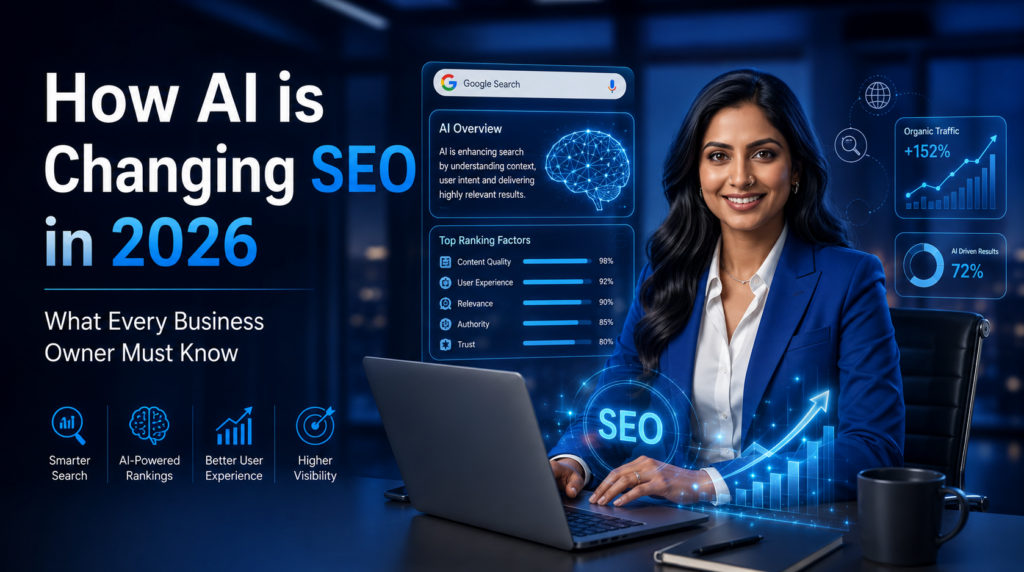
Type anything into Google today and notice what happens before you even see a website. An AI-written summary appears right at the top, answering your question in a few tidy sentences, with a handful of source links tucked underneath.
That’s not a glitch. That’s the new front door to Google Search.
If you own a business, run a website, or manage marketing for a brand, this shift touches you directly. The rules that used to get a page to the top of Google are being rewritten in real time, and a lot of business owners haven’t noticed yet.
I’m Shalini, and I help businesses make sense of exactly this kind of change. In this article, I’ll walk you through what’s actually different about AI SEO 2026, what AI systems look for before they trust a website, and the practical steps you can take this month to stay visible — without the jargon.
What Has Changed in Google Search?
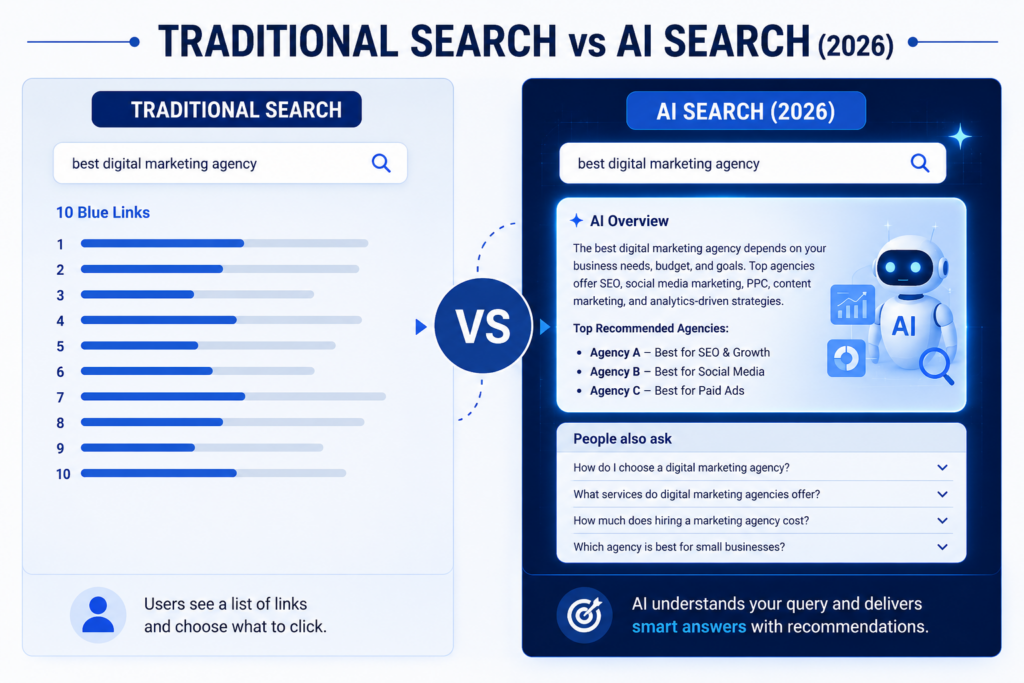
For twenty-plus years, you typed a query and got ten blue links. That model isn’t the whole story anymore.
AI Overviews now generate a written answer at the top of results by pulling information from several websites at once — especially for informational, “how” and “what” style searches. Conversational search lets people ask follow-up questions right from that summary, so searches feel more like a conversation than a keyword lookup. And semantic search means Google is reading for meaning and intent, not just matching words — which is exactly why keyword stuffing has lost its power.
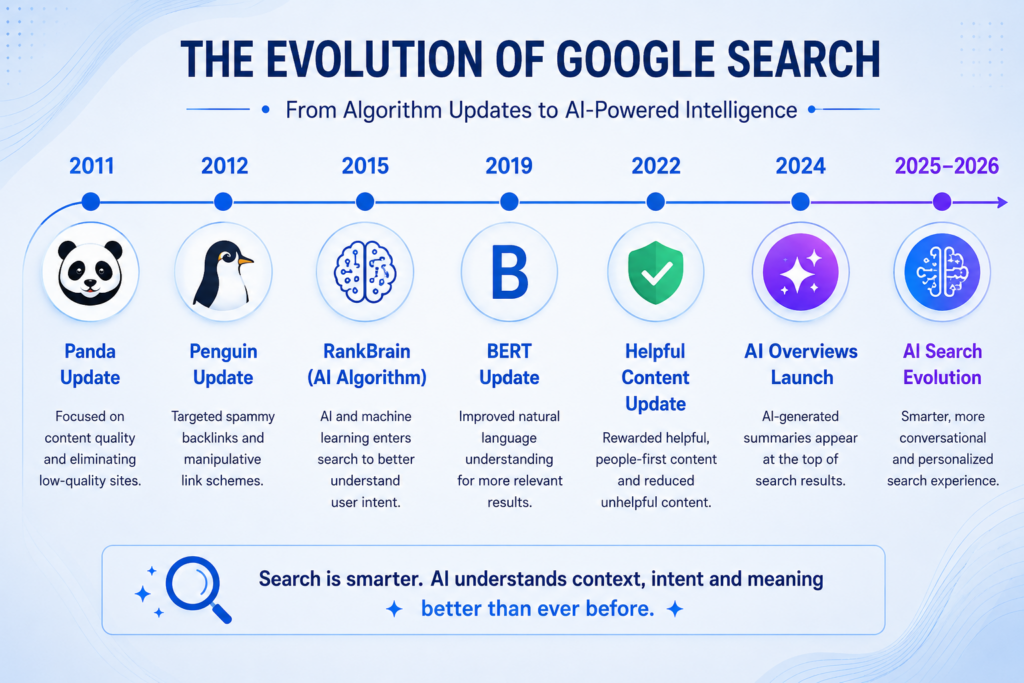
Rankings still matter. But increasingly, the real goal is being trusted enough to get cited inside the AI-generated answer itself.
Traditional SEO vs AI-Powered SEO
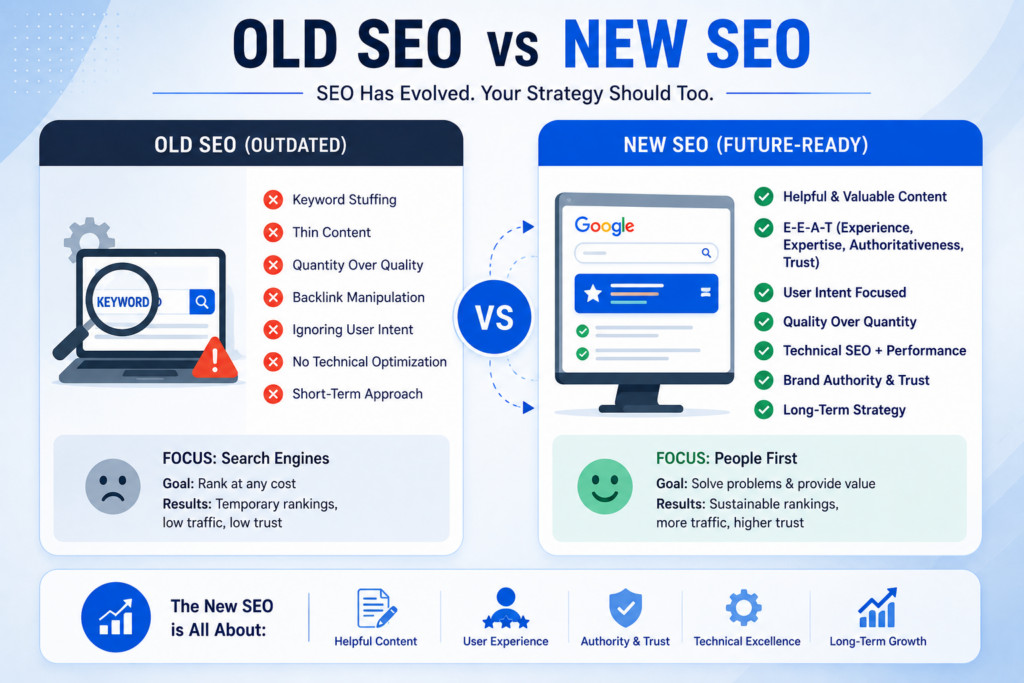
Old-school SEO chased keyword repetition, backlink volume, and content written for algorithms, not people.
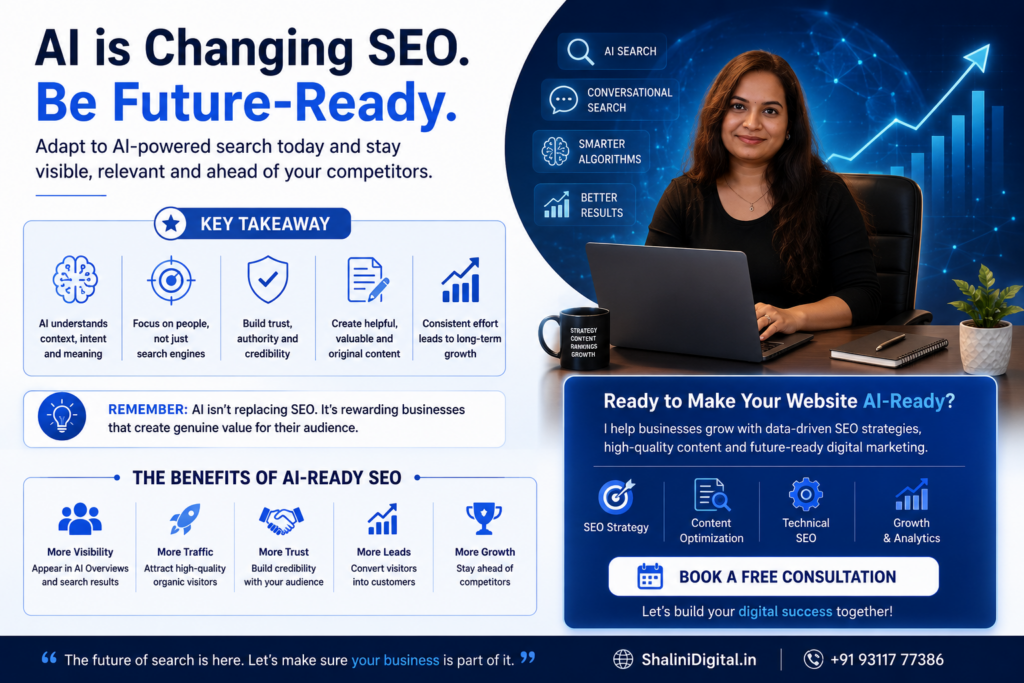
AI-powered SEO in 2026 rewards content that answers the real question behind a search, demonstrates genuine expertise, and is structured so both humans and AI can quickly extract the answer.
Example: Two bakery websites both target “best birthday cake ideas.” One stuffs in keywords with no author or real detail. The other opens with a direct answer, includes real photos, names the baker, and organizes tips by how customers actually ask. The second wins — because user intent now beats keyword density.
What AI Actually Looks For
- Helpful Content — Google evaluates the “Who, How, and Why” behind content: who made it, how, and for what purpose.
- User Intent — Does the page actually answer what the searcher wanted?
- EEAT — Experience, Expertise, Authoritativeness, Trustworthiness. Google added “Experience” specifically to reward people who’ve actually done what they’re writing about — a direct response to generic AI text with no real substance behind it.
- Website Authority — built through consistent, credible publishing and recognition from other reputable sources.
- Technical SEO & Page Experience — fast, mobile-friendly, uncluttered sites remain the foundation.
- Structured Data — schema markup helps AI systems accurately interpret your content.
- Content Freshness — outdated info quietly erodes trust; review and update regularly.
Why AI Overviews Are a Huge Opportunity
Being cited inside an AI Overview isn’t about ranking #1 in the old sense — it’s about having clear, expert, well-structured content. And it works in your favor: even with fewer raw clicks, the traffic you do get is more qualified, because your brand was already recommended as the answer.
To increase your chances of being cited:
- Lead with a clear, direct answer
- Use FAQ sections with structured markup
- Write under a named, credible author
- Keep information current and specific to your business
Practical SEO Tips for 2026
- Write people-first content, not keyword-driven content
- Answer real customer questions directly
- Improve page speed and mobile experience
- Use schema markup for FAQs, reviews, and business details
- Update old blogs regularly instead of letting them go stale
- Build topical authority with clusters of related content
- Create original content — real case studies, real photos, real experience
- Improve internal linking across related pages
- Build brand trust with clear author bios and transparent details
- Track your AI visibility, not just rankings — are you being cited
Common SEO Mistakes Businesses Should Avoid
- Keyword stuffing
- Publishing AI-generated content without real editing or added expertise
- Ignoring search intent
- Buying low-quality backlinks
- Letting content go stale
- Poor website experience (slow load times, clutter, intrusive pop-ups)
The Future of SEO
Search keeps evolving beyond AI Overviews: more conversational, agent-like AI-powered search; growing voice search and visual search; more personalized results; and video SEO becoming essential. Through all of it, brand authority and human-first content remain the one thing AI genuinely can’t fake.
Conclusion
SEO in 2026 hasn’t disappeared — it’s matured. The businesses that win aren’t chasing algorithm tricks. They’re building genuinely helpful, expert, trustworthy websites that both people and AI systems want to recommend. Adapt now, and you’ll still be standing out five years from now.